
2026-11-08
Custom CRM Pipelines for Industry-Specific Sales Motions
Learn how to tailor CRM pipelines by industry without overcomplicating stages, fields, handoffs, or reporting.
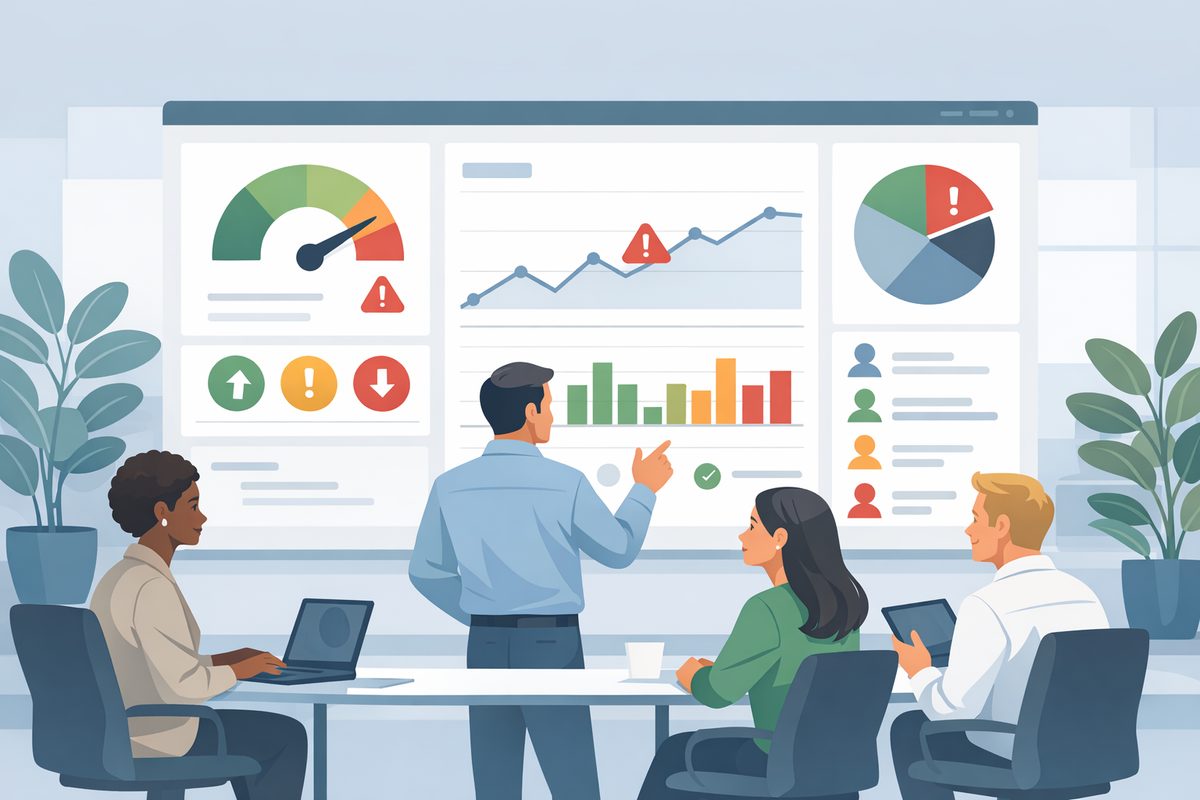
Churn rarely appears out of nowhere. Before a customer cancels, there are usually warning signs: fewer meetings, delayed onboarding tasks, unresolved support issues, missing stakeholders, stalled expansion conversations, or a renewal date that nobody owns. The problem is not that the business lacks information. The problem is that the information is scattered across notes, activities, opportunities, support summaries, and customer success updates. A CRM can help teams reduce churn when it becomes more than a contact database. Used well, it becomes a shared early-warning system that shows which customers need attention, why they are at risk, and what action should happen next.
Most companies do not need to start with a complex churn model. They can begin by looking for practical signals already captured in daily CRM work. The key is to separate general account information from behavior that suggests a customer relationship is weakening.
Useful churn indicators often include:
The goal is not to label every quiet customer as a churn risk. It is to create a short list of signals that your team agrees are meaningful. For example, a customer with no logged interaction for 60 days may be normal in one market but alarming in another. A customer with three open support cases may be fine if they are power users, but risky if those cases block a promised launch.
Start with a simple workshop involving sales, customer success, support, and operations. Ask: What did we know before the last five churned customers left? Then map those clues to CRM fields, activities, notes, and stages. This keeps the program grounded in real experience rather than generic assumptions.
A customer health view does not have to be perfect to be useful. In fact, overly complicated scores often fail because account owners cannot explain or trust them. A practical health view should answer three questions: Is the customer achieving value? Is the relationship active? Is the renewal or continuation plan on track?
Consider grouping health indicators into three simple categories:
Each status should require a reason. A red account without a written risk reason is just a color. A useful CRM record might say: Primary admin left, no replacement trained, QBR skipped twice, renewal in 75 days. That level of detail gives a manager or retention specialist enough context to help.
A good health view also needs ownership. If customer success owns health status but sales owns renewals, both teams need visibility into the same account summary. If support identifies recurring frustration but has no place to flag account risk, the signal may never reach the people who can act. Add a standard risk field, a next action field, and a target resolution date. These three items turn health tracking from commentary into workflow.
Keep the health view close to where people already work. If account managers live in account records, put the health summary there. If managers run pipeline meetings from dashboards, include customer risk next to renewal opportunities. Churn prevention loses momentum when it becomes a separate spreadsheet reviewed only at the end of the month.
Insights do not reduce churn by themselves. They need to trigger action. Once you identify common risk patterns, create simple retention plays that define what should happen, who owns it, and when it should be completed.
For example, if the CRM shows that a customer has not completed onboarding, the play might include:
If the risk is relationship-based, such as a champion leaving, the play should look different:
If the risk is value uncertainty, the play might focus on proof of impact. The account owner can review original pain points, gather adoption examples, document outcomes, and prepare a renewal conversation around business value rather than product features.
Retention plays should be short enough for busy teams to follow. Avoid long checklists that require account owners to become project managers overnight. A good playbook gives direction without slowing the team down. It should answer: What is the first action? What message should be delivered? Who needs to be involved? What CRM update confirms progress?
Churn reduction works best when it becomes part of the company’s normal cadence. If customer risk is reviewed only when a renewal is about to fail, the CRM is being used too late. Teams need consistent routines that bring risk into view early enough to change the outcome.
Useful operating rhythms include:
These meetings should be focused on decisions, not status reading. The CRM should provide the facts before the meeting: current health, risk reason, renewal date, last interaction, open cases, next step, and owner. The meeting should answer: What action will improve the customer’s situation this week?
Managers can reinforce the behavior by coaching from CRM records. Instead of asking a customer success manager to summarize everything verbally, ask them to walk through the account health fields, activity history, and next action. This builds the habit of keeping the system current because the system becomes the basis for useful coaching.
CRM data is most valuable when it combines structured fields with human context. A low engagement score may tell you something changed, but the account note may explain why. Perhaps the customer is waiting on a budget cycle, reorganizing a department, or paused because your team missed a promised deliverable. Numbers point to where to look. Front-line context explains what to do.
Encourage teams to write CRM notes that are short but decision-ready. A weak note says: Customer concerned. A better note says: Operations lead is concerned that reporting setup will not be ready before regional launch. Needs confirmation by Friday or launch may move to another tool.
To improve context, standardize a few note prompts:
Also create a clear way for support and implementation teams to flag risk without owning the full account plan. A support agent may not know the renewal strategy, but they can identify repeated frustration. An implementation consultant may notice that the customer’s sponsor is disengaged. If those observations stay in separate tools or private messages, account owners lose valuable time.
Be careful not to punish teams for surfacing risk. If every red health status becomes a blame conversation, people will hide bad news until it is too late. Treat risk flags as opportunities to help the customer and support the account owner. The culture around CRM updates matters as much as the fields themselves.
Reducing churn with CRM insights is not about building the most sophisticated dashboard. It is about noticing customer change sooner and responding with discipline. Start with the churn signals your team already sees, create a simple health view, connect risks to practical plays, and review them in regular operating rhythms. When the CRM shows both the facts and the next action, teams can move from explaining churn after it happens to preventing more of it before the relationship breaks.
Learn how to tailor CRM pipelines by industry without overcomplicating stages, fields, handoffs, or reporting.

Learn the warning signs that your CRM no longer fits, plus a practical plan for migration, cutover, and sales team adoption.

A practical guide to syncing CRM and email marketing data so sales and marketing can act on the same customer signals.