2026-11-08
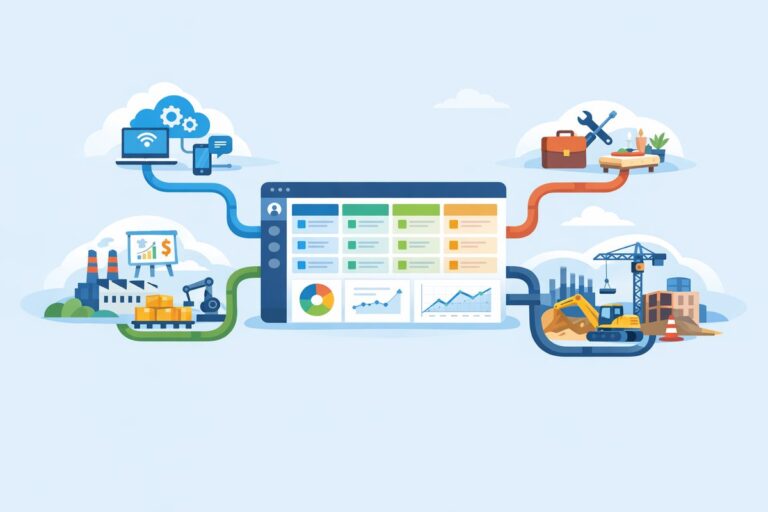
Custom CRM Pipelines for Industry-Specific Sales Motions
Learn how to tailor CRM pipelines by industry without overcomplicating stages, fields, handoffs, or reporting.
In an increasingly digital world, the way businesses interact with their customers is evolving at an unprecedented pace. Customer Relationship Management (CRM) is at the heart of this transformation. Salesforce, a leading CRM platform, is continually innovating to meet the shifting demands of businesses and their customers. This article delves into the future of customer relationship management, highlighting key innovations in Salesforce that are shaping the landscape.
CRM systems have traditionally functioned as repositories for customer data, focusing on sales, marketing, and service interactions. However, modern CRM solutions go beyond basic functionalities. With emerging technologies like artificial intelligence (AI), machine learning, automation, and big data analytics, we are witnessing a paradigm shift in how businesses manage their customer relationships.
Salesforce has been at the forefront of this transformation, consistently integrating cutting-edge innovations that cater to the dynamic requirements of businesses and their clientele.
Salesforce introduces AI across its platform through Einstein, a suite of features designed to provide actionable insights. Einstein aids businesses in predicting customer behavior, automating mundane tasks, and personalizing customer experiences.
Predictive Analytics: Einstein assists sales teams by identifying the best leads, predicting their likelihood to convert, and suggesting the most effective follow-up actions.
Natural Language Processing (NLP): With NLP, businesses can analyze customer feedback from various channels, allowing for deeper insights into customer sentiments and preferences.
Automation is a cornerstone of modern CRM strategies, and Salesforce offers extensive functionality to automate repetitive tasks. Through features like Salesforce Flow, businesses can create automated workflows that save time and reduce human error.
Task Assignments: Businesses can set up rules to automatically assign tasks to team members based on their workload or expertise.
Marketing Automation: Salesforce’s Marketing Cloud allows for personalized marketing campaigns that can be triggered by customer behavior, offering timely promotions and content.
Customer expectations have shifted dramatically, with a growing preference for seamless experiences across multiple channels. Salesforce supports omnichannel strategies, allowing businesses to provide consistent messaging and interactions across different platforms—social media, email, chat, and CRM.
Unified Customer Profiles: Salesforce aggregates customer interactions into a consolidated profile, ensuring that agents have access to a holistic view of the customer, regardless of how they initiate contact.
Service Cloud: This feature supports real-time communication and collaboration among teams, enhancing response times and overall customer experience.
Salesforce has positioned itself as a flexible platform that can easily integrate with other business tools. Its robust API and AppExchange marketplace provide businesses with the opportunity to enhance their CRM capabilities.
Third-Party Integrations: Companies can connect Salesforce with other software solutions, extending the functionality of their CRM to include accounting, project management, and other critical applications.
Custom Apps: The AppExchange houses thousands of applications that extend Salesforce’s capabilities, allowing businesses to customize their CRM experience according to their unique needs.
As regulations around data privacy grow stricter, Salesforce is introducing advanced features that focus on compliance. This is vital for maintaining trust and security in customer relationships.
Data Protection: Salesforce emphasizes secure data practices and tools that allow businesses to manage customer information responsibly.
Regulation Compliance Tools: Features are being implemented to help organizations comply with regulations like GDPR, ensuring that customer data is utilized ethically.
The future of CRM, particularly with Salesforce, looks promising. As technology continues to evolve, we can expect further integration of AI, advanced analytics, and automation into CRM systems. The focus will likely be on hyper-personalization—creating customer experiences tailored to individual interests and behaviors.
As AI technology matures, its integration into CRM will become deeper and more sophisticated. Predictive analytics will evolve to offer precise forecasting models, enabling businesses to make data-driven decisions with confidence.
With the rise of digital-native customers, engaging them meaningfully will become more critical. Salesforce will likely enhance features that promote two-way communications and feedback loops, helping businesses understand customer needs better.
Innovations like the Internet of Things (IoT) and blockchain are expected to influence CRM in the coming years. Salesforce is likely to integrate these technologies, providing even richer data and insights about customer interactions.
Remote work culture and decentralized teams will prompt Salesforce to further develop collaborative tools that support teamwork across various locations, enabling seamless knowledge sharing and customer service.
As customer preferences evolve quickly, Salesforce is expected to offer continuous updates and features that adapt to the changing business landscape, ensuring that companies can remain relevant and responsive.
A1: Salesforce is a cloud-based customer relationship management (CRM) platform that helps businesses manage customer information, sales processes, and interactions, enhancing customer engagement and business growth.
A2: Salesforce offers various features, including customizable dashboards, lead and opportunity management, automated workflows, marketing automation, AI-driven insights (Einstein), and multi-channel support.
A3: Salesforce prioritizes data security through encryption, regular audits, and compliance with global data regulations. Tools are available to help businesses manage customer data responsibly.
A4: Yes, Salesforce can integrate with numerous software solutions through its API and a marketplace known as AppExchange, enhancing its functionality and enabling a customized CRM experience.
A5: AI enhances decision-making by providing predictive analytics, automating routine tasks, personalizing customer interactions, and improving customer service efficiency.
The future of customer relationship management is undeniably tied to technological advancements, and Salesforce stands at the forefront of this evolution. With its continuous focus on innovation, businesses using Salesforce can adapt to changes in consumer behavior, streamline operations, and build long-lasting relationships with customers. As we move forward, the capabilities and functionalities of Salesforce will likely evolve, setting the standard for CRM systems in an increasingly competitive landscape.
Learn how to tailor CRM pipelines by industry without overcomplicating stages, fields, handoffs, or reporting.

Learn the warning signs that your CRM no longer fits, plus a practical plan for migration, cutover, and sales team adoption.

A practical guide to syncing CRM and email marketing data so sales and marketing can act on the same customer signals.