2026-11-08
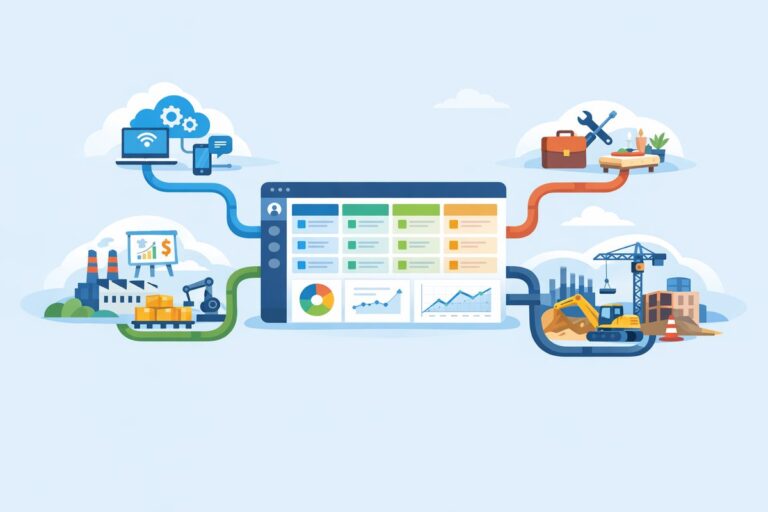
Custom CRM Pipelines for Industry-Specific Sales Motions
Learn how to tailor CRM pipelines by industry without overcomplicating stages, fields, handoffs, or reporting.
In today’s data-driven world, effective data management is crucial for businesses aiming to maximize value from their Customer Relationship Management (CRM) systems. Salesforce is a leading CRM platform that provides extensive tools to help organizations manage their customer data efficiently. However, leveraging these tools effectively requires the implementation of best practices for data management. This article outlines essential practices to ensure data integrity, security, and optimization in Salesforce CRM.
Data management in Salesforce involves organizing, storing, retrieving, and utilizing data in a manner that supports your organization’s business objectives. Proper data management ensures data quality, enhances user experience, and ultimately drives sales success.
Establishing clear data governance policies is one of the most critical best practices for data management. Data governance refers to the policies, standards, and practices that control how data is managed throughout its lifecycle.
Consistent and accurate data entry is essential to maintaining data quality. Setting standards for how data should be entered helps to minimize errors and duplicates.
Conduct routine audits of your Salesforce data to identify and resolve discrepancies, duplicates, or outdated information. Regular audits play a vital role in ensuring ongoing data quality.
Over time, data may become cluttered with duplicates, outdated records, or irrelevant information. A proactive clean-up process is essential for keeping your CRM data manageable.
Data security is paramount, especially with increasing regulations around data privacy, such as GDPR and CCPA. Ensuring that data is secure helps to mitigate risks related to data breaches.
Ensuring that all users are well-trained in how to use Salesforce and understand the importance of data management practices is essential for success.
Salesforce offers various automation tools that can help maintain accurate data and simplify processes. By utilizing automation, organizations can significantly enhance data management efficiency.
To streamline data management processes, integrating Salesforce with other systems—like ERP or marketing tools—facilitates better data flow across platforms.
Salesforce frequently releases updates and new features. Staying informed about these changes is necessary to leverage enhancements that can improve data management.
Monitoring the performance of your CRM system is vital to ensure it meets your organization’s data management goals.
1. What is data management in Salesforce?
Data management in Salesforce refers to the processes and practices used to collect, store, maintain, and utilize data effectively within the Salesforce CRM platform.
2. How can I ensure data accuracy in Salesforce?
You can ensure data accuracy by setting up validation rules, providing training to users, and conducting regular data audits to identify and rectify errors.
3. What are the best tools for data cleaning in Salesforce?
Salesforce has built-in tools for duplicate management and data cleansing. Additionally, there are third-party applications like DemandTools or Data Ladder that can assist in more complex data cleaning tasks.
4. How often should I conduct data audits?
It’s advisable to conduct data audits at least quarterly, but the frequency can vary based on your organization’s data volume and activity levels.
5. How can I secure sensitive data in Salesforce?
You can secure sensitive data by implementing role-based access control, ensuring only authorized personnel can access specific data, and educating employees about data security practices.
Effective data management within Salesforce CRM requires a comprehensive approach that encompasses policies, training, and the use of technology. By implementing these best practices, organizations can enhance data integrity, security, and usability—resulting in improved decision-making and customer interactions. In a world where data drives business success, managing it effectively is not just recommended; it’s essential.
Learn how to tailor CRM pipelines by industry without overcomplicating stages, fields, handoffs, or reporting.

Learn the warning signs that your CRM no longer fits, plus a practical plan for migration, cutover, and sales team adoption.

A practical guide to syncing CRM and email marketing data so sales and marketing can act on the same customer signals.